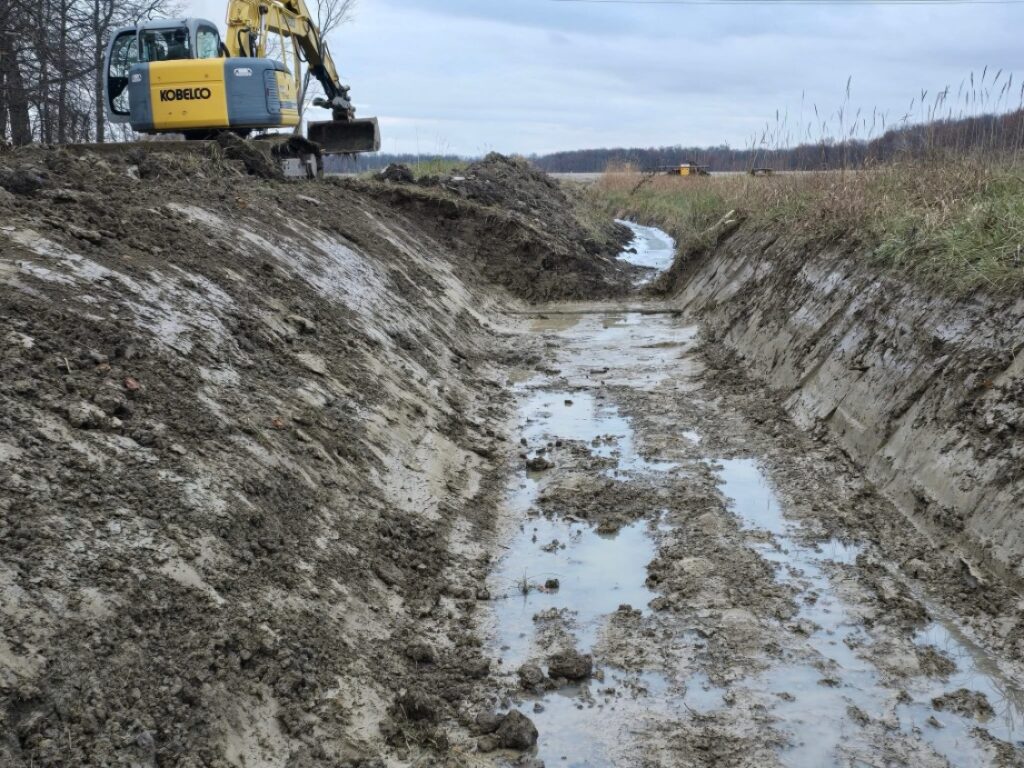
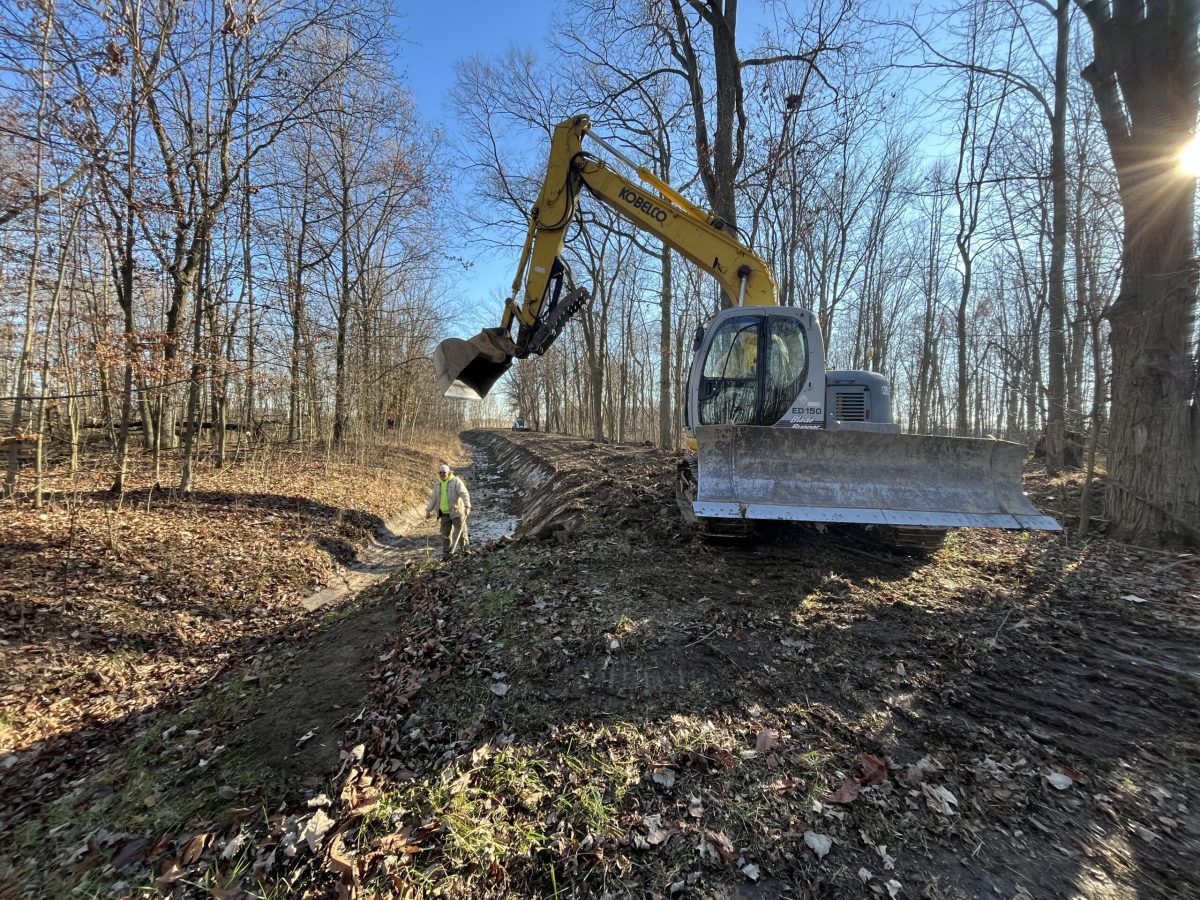
In 2024, two conservation ditch projects were implemented on local Singer Farms’ property with funding from DRA.
The main objectives of these projects were to enhance water quality and create better wildlife habitat while forming a self-developing stream channel that will naturally evolve over time. These overwide ditch projects are designed to slow down water flow, minimize erosion, and boost nutrient retention, ultimately reducing sediment and pollutants entering nearby waterways. Each of these projects has the goal of slowing runoff from surrounding farm fields, yet they take different, tailored approaches to best suit their locations.
These projects are part of a larger initiative to reduce agricultural runoff and improve local water quality. Our research assistants will monitor the site continuously to track long-term effects on water quality, starting in 2025.
SELF-FORMING DITCH:
Self-forming ditches are strategically designed to create stream-like channels with wide bottoms and sloping banks, enhancing water quality and wildlife habitat through natural reshaping. This innovative approach promotes long-term ecological benefits by allowing water to carve meanders and pools over time, effectively mimicking natural systems. The features of these ditches enhance water retention, nutrient filtration, and habitat creation, making them a vital component of the ecosystem. Additionally, native grasses and wildflowers are planted within these areas to stabilize soil, filter runoff, and support pollinator species. As the ditch evolves with minimal maintenance, it continues to enhance resilience, water quality, and biodiversity. This sustainable practice ultimately fosters a healthier environment for both wildlife and local communities.

THE BEND ROAD DITCH:
Originally, this 1/2-mile-long ditch had a bottom width of approximately 3′ and a depth of 3′. Excavation work focused on reshaping the north bank while leaving the south bank and bottom intact. The new 5:1 slope is designed to facilitate future vegetation maintenance, which is essential for filtering excess nutrients such as nitrogen and phosphorus before they reach larger bodies of water. As erosion gradually shapes the channel, it will resemble a natural stream, providing a habitat for aquatic life. In spring 2025, native grasses like Switchgrass, Big Bluestem, and Indian Grass were planted, along with wildflowers, to promote biodiversity and support pollinators.


THE LOCKWOOD ROAD DITCH:
Construction widened this ditch bottom and constructed sloped sides. This was done to promote natural meandering and habitat formation, with native vegetation planted along banks for pollutant filtration.